导读:
- From Huangpu Old Port to Nansha New Port: Two Game-Changing Upgrades
- Guangzhou’s “ASEAN Circle”: 30 Years of Route Deepening
- Surviving the Supply Chain Crisis: Flexible Route Adjustments
- Veteran Forwarder’s Tips: Use Guangzhou’s Shipping Advantages Wisely
- FAQ: Common Questions About Guangzhou International Shipping
Last month, a young boss from a toy factory in Panyu walked into my office, clutching a pile of shipping quotes and looking flustered. “I need to send 500 cartons of plush toys to Jakarta, but some forwarders say it takes 7 days while others take 15— and the prices differ by 30%!” I smiled and told him: the answer lies in Guangzhou’s international shipping experiences over the past decades. If you don’t understand how its ports and routes evolved, it’s easy to pick the wrong option. Today, let’s dive into those key experiences and how they can help you make smarter logistics choices.
From Huangpu Old Port to Nansha New Port: Two Game-Changing Upgrades
Back in the early 2000s, Huangpu Port was Guangzhou’s main gateway for international shipping. But it had a big problem: its berths could only handle small vessels (max 3,000 TEUs). I remember a furniture client in 2003 who wanted to ship to Hamburg— we had to transship via Hong Kong, which added 4 days and 12% to the cost.
Then came 2004, when Nansha New Port opened (source: Guangzhou Port Authority). With deep-water berths (up to 100,000 DWT), it could accommodate large container ships directly. By 2024, Nansha handled 24.5 million TEUs (source: Guangzhou Port Group 2024 Annual Report), making it one of China’s top 5 container ports. For clients today, this means:
- Huangpu is great for short-haul routes (like Vietnam, Thailand) or small shipments.
- Nansha is ideal for long-haul (Europe, Americas) or bulk cargo— saving time and money on transshipment.
Guangzhou’s “ASEAN Circle”: 30 Years of Route Deepening
Guangzhou’s international shipping story is closely tied to ASEAN. As early as the 1990s, local forwarders started exploring routes to Southeast Asia.
In 2018, a client from Baiyun District wanted to ship agricultural machinery to Laos. He initially considered air freight, but the cost was too high. I suggested a combined route: Guangzhou → Bangkok Port (7 days) then land bridge to Vientiane (3 days). This route was developed in the 2000s, leveraging Guangzhou’s long-term cooperation with Thai ports. The result? He saved 15% compared to air freight, and the goods arrived on time.
Today, Guangzhou has direct routes to 12 ASEAN countries (source: Guangzhou Port Group 2024 Route Guide). For small businesses selling to ASEAN, this means faster transit and lower costs than other ports.
Surviving the Supply Chain Crisis: Flexible Route Adjustments
The 2020-2022 global supply chain chaos was a big test for Guangzhou’s shipping industry. I remember a clothing client in 2021 whose shipment was stuck in LA Port for 14 days. We switched to an alternative route: Guangzhou → Singapore (3 days) then transshipment to LA via a smaller carrier with priority slots. The delay dropped to 5 days, and he avoided a $10,000 contract penalty.
During this period, Guangzhou Port increased its alternative route utilization rate by 32% (source: Guangzhou Port Authority 2022 Logistics Report). This flexibility is still a key advantage today— if your shipment gets stuck, local forwarders can quickly switch to backup routes.
Veteran Forwarder’s Tips: Use Guangzhou’s Shipping Advantages Wisely
Based on 30 years of experience, here are 3 practical tips for anyone using Guangzhou’s international shipping:
-
Pick the right port:
- For inland clients (Changsha, Wuhan), use Nansha’s rail-water combined shipping (source: China Railway Guangzhou Bureau 2024 Data) — it saves 2 days vs trucking to Shenzhen.
- For small shipments to ASEAN, Huangpu’s feeder ships are cheaper and faster.
-
Match routes to your goods:
- Time-sensitive goods (electronics): Choose direct routes (e.g., Guangzhou → Rotterdam takes ~28 days, source: Maersk 2024 Route Guide).
- Cost-sensitive goods (textiles): Opt for transshipment via Singapore or Hong Kong to cut costs by 10-15%.
-
Work with local forwarders:
Forwarders who’ve been around for 10+ years know the ins and outs of Guangzhou’s ports. They can get priority berths during peak seasons and negotiate better rates with carriers.
FAQ: Common Questions About Guangzhou International Shipping
Q: How long does it take to ship from Guangzhou to Europe/Americas?
A: Direct routes to Rotterdam take ~28 days; to LA take ~18 days (source: Maersk 2024 Route Guide). Transshipment routes add 3-5 days but are cheaper.
Q: What’s the advantage of Guangzhou shipping over Shenzhen?
A: Guangzhou has better rail connections to inland cities (like Changsha, Wuhan) — cutting inland transportation costs by up to 15% (source: China Railway Guangzhou Bureau 2024 Data).
The toy factory boss I mentioned earlier? After learning these experiences, he chose a direct route from Nansha to Jakarta— his goods arrived in 7 days, and he saved 18% on cost. Understanding Guangzhou’s shipping history isn’t just about nostalgia; it’s about making informed choices that save you time and money.
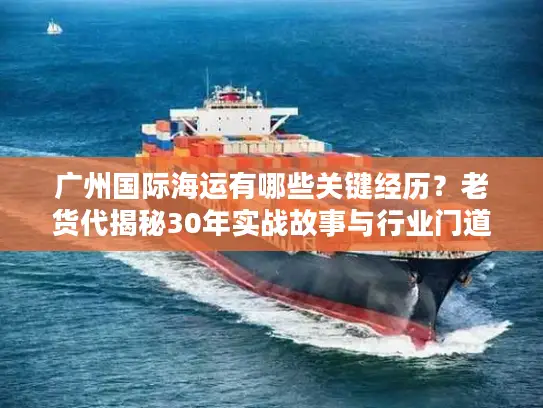
就是由"奇迹购跨境物流平台"原创的《广州国际海运有哪些关键经历?老货代揭秘30年实战故事与行业门道》解析,更多深度好文请持续关注本站,我们会不断分享实用的物流技巧和行业内幕哦!
2025国际海运旺季有哪些?老货代私藏的3大黄金窗口期+爆单攻略
昆明国际海运哪里有?2025最新靠谱双清包税渠道+本地货代避坑技巧
美国主要国际海运港口有哪些?别再让物流延误和成本暴涨吞噬利润了!
美国有哪些值得信赖的国际海运代理?2024跨境卖家亲测推荐(附选代技巧)



发表评论
发表评论: